
Custom patches have become one of the most effective ways to promote brands, personalize apparel, and create unique fashion products. From embroidery iron on patches and logo patch hats to embroidered patches for jeans, patches are everywhere in 2026.
However, many businesses and clothing brands make critical design mistakes that lead to poor-quality patches, production delays, and wasted money.
At SBS Digit, we’ve seen countless patch designs that looked great on a computer screen but failed during production. The good news? Most of these mistakes are easy to avoid.
Let’s look at the biggest custom patch design mistakes and how to fix them.
Why Patch Design Matters
A patch is often the first thing people notice on a garment.
Good patch design helps:
-
improve brand recognition
-
create a professional appearance
-
increase product value
-
ensure clean production
Poor design can make even expensive patches look cheap.
Mistake #1: Using Low-Quality Artwork
One of the most common mistakes is submitting blurry or low-resolution artwork.
Many customers send:
-
screenshots
-
compressed images
-
low-quality JPG files
This creates problems during production because fine details become difficult to reproduce.
Solution:
Use:
-
vector artwork
-
high-resolution PNG files
-
clean logo files
The better your artwork, the better your patch will look.
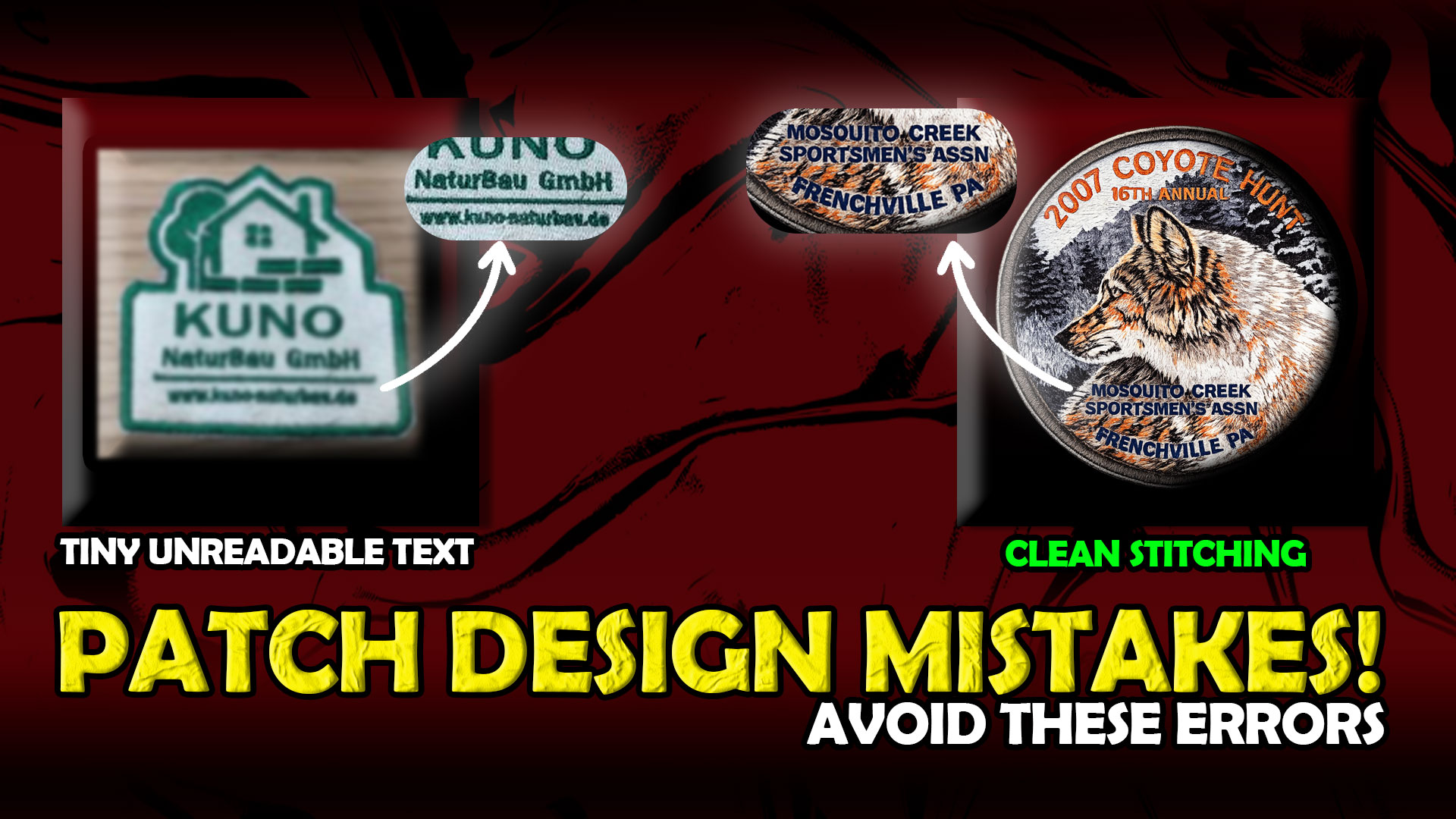
Mistake #2: Adding Too Much Detail
Many logos work perfectly on websites but fail when converted into patches.
Small details often disappear during embroidery.
Examples include:
-
tiny text
-
thin lines
-
complex gradients
-
excessive detail
Solution:
Simplify your design and focus on the most important elements.
Professional digitizing can help optimize artwork for patch production.
Mistake #3: Choosing the Wrong Patch Size
Patch size has a huge impact on readability and appearance.
A patch that’s too small may lose important details.
A patch that’s too large can overwhelm the garment.
This is especially important for:
-
logo patch hats
-
name patches for jackets
-
embroidered patches for jeans
-
patches shirt branding
Solution:
Match the patch size to the garment and intended placement.
Mistake #4: Using Tiny Text
Text is one of the biggest causes of patch production issues.
Customers often try to fit too many words into a small patch.
The result?
-
unreadable lettering
-
poor embroidery quality
-
messy stitching
Solution:
Keep text large and simple whenever possible.
Mistake #5: Choosing the Wrong Patch Type
Not every design works with every patch style — embroidery iron-on patches suit company logos and uniforms, PVC patches work best for outdoor and tactical gear, and chenille patches shine on varsity and streetwear apparel. Choosing the wrong patch type can reduce visual impact. For a full breakdown of each patch type, see our guide on turning your logo into a custom patch.
Mistake #6: Ignoring Patch Backing Options
Many people focus only on the patch design and forget about backing selection. Iron-on backing is easiest to apply, sew-on offers the most durability, and peel-and-stick works well for temporary use. Using the wrong backing can affect durability and customer satisfaction — see our complete guide for a full comparison of backing options.
Mistake #7: Poor Color Selection
Colors often look different on thread than they do on a computer screen.
Bright digital colors may not translate perfectly into embroidery.
Solution:
Choose thread-friendly colors and request samples before production.
Mistake #8: Forgetting About Placement
A great patch can still look bad if it’s placed incorrectly.
Popular placements include:
Logo Patch Hats
Front center placement works best.
Name Patches for Jackets
Typically placed on the chest area.
Embroidered Patches for Jeans
Pocket and thigh placements are most common.
Iron On Patches Sweatshirt Designs
Usually placed on the chest or sleeve.
Proper placement improves overall appearance.
Mistake #9: Ordering Large Quantities Without Testing
Many businesses immediately order wholesale patches without reviewing samples first.
This can lead to:
-
design errors
-
incorrect colors
-
sizing problems
Solution:
Always test a sample before placing a large order.
Mistake #10: Not Using Professional Digitizing
Even the best artwork can fail if the digitizing is poor.
Professional digitizing helps ensure:
-
smooth stitching
-
readable text
-
proper stitch density
-
clean borders
Without proper digitizing, patches may look uneven or low quality.
Why Clothing Brands Choose Custom Patches
Custom patches continue to grow in popularity because they offer:
-
premium branding
-
easy garment customization
-
affordable production
-
professional appearance
Popular applications include:
-
embroidery iron on patches
-
logo patch hats
-
embroidered patches for jeans
-
iron on patches sweatshirt
-
patches shirt branding
-
cute patches for jeans
Wholesale Patches vs Small Orders
Many brands start with no minimum custom embroidered patches before moving to wholesale patches.
Benefits include:
No Minimum Custom Embroidered Patches
-
ideal for testing
-
lower risk
-
easier product development
Wholesale Patches
-
lower cost per unit
-
consistent branding
-
better scalability
Choosing the right production approach can save time and money.
Why Professional Design Preparation Matters
The difference between a cheap-looking patch and a premium-looking patch often comes down to preparation.
At SBS Digit, we help businesses create production-ready patch artwork by optimizing:
-
sizing
-
stitch paths
-
text readability
-
patch borders
-
embroidery quality
If you’re serious about quality, this is where most professionals eventually land after trying low-cost alternatives. Why not see the difference for yourself? Try a free first trial and experience professional digitizing firsthand.
Final Thoughts
Custom patches are one of the best ways to strengthen your brand and enhance apparel.
However, mistakes like poor artwork, incorrect sizing, tiny text, and bad digitizing can ruin the final result.
Whether you’re creating:
-
embroidery iron on patches
-
logo patch hats
-
name patches for jackets
-
embroidered patches for jeans
-
iron on name patches
-
patches shirt branding
avoiding these common mistakes will help ensure your patches look professional and last for years.
Frequently Asked Questions (FAQ)
1. What is the biggest mistake when designing custom patches?
Using low-quality artwork and overly detailed designs are the most common mistakes.
2. Are embroidery iron on patches durable?
Yes. High-quality embroidery iron on patches can last for years when properly applied.
3. What size should logo patch hats be?
Most logo patch hats use patches between 2 and 3 inches wide.
4. Are embroidered patches for jeans still popular?
Absolutely. Embroidered patches for jeans remain one of the biggest fashion trends in 2026.
5. What’s better: iron on name patches or sew on name patches?
Iron-on patches are easier to apply, while sew-on patches offer maximum durability.
6. Can I order no minimum custom embroidered patches?
Yes. Many patch suppliers now offer no minimum custom embroidered patches for testing and sampling.
7. Should I order samples before wholesale patches?
Yes. Testing samples helps identify design, sizing, and color issues before large production runs.
Ready to Create Professional Custom Patches?
Need professional artwork for embroidery iron on patches, logo patch hats, wholesale patches, or custom embroidered patches?
Visit SBS Digit and claim your Free First Trial today.
Turn your ideas into production-ready patch designs with professional quality and fast turnaround.

