
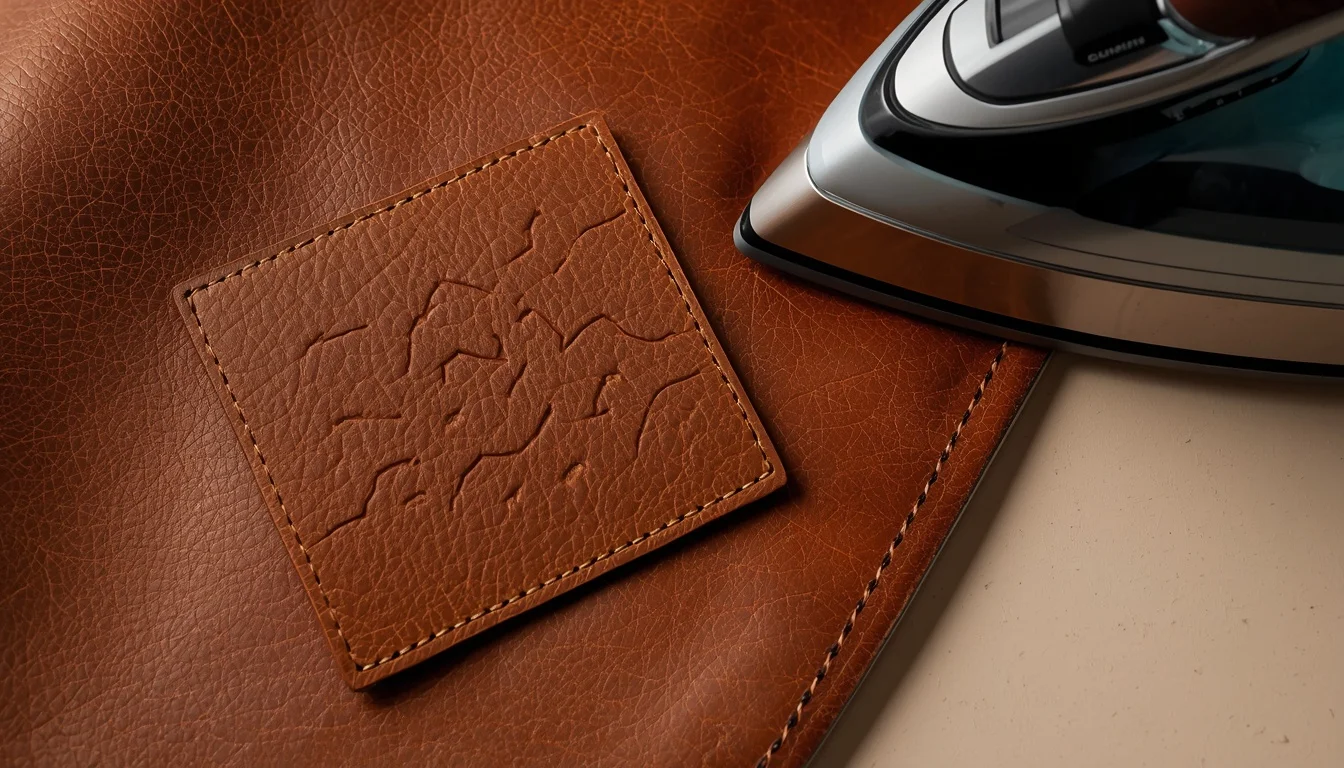
Leather patches are a popular way to customize hats, jackets, bags, vests, and other leather products. But if you have an iron-on patch, you may wonder: Can you iron a patch on leather?
The short answer is: it is generally not recommended to apply an iron directly to leather. High heat can damage the leather surface, change its color, cause it to shrink or warp, or leave permanent marks.
Fortunately, there are safer ways to attach patches to leather. In this guide, we’ll explain why direct ironing can be risky, how to attach patches safely, and what to know when creating a leather patch hat.
Can You Iron a Patch on Leather?
You should generally avoid ironing directly onto leather.
Unlike cotton, denim, or many synthetic fabrics, leather can react badly to high temperatures. Direct contact with a hot iron can potentially cause discoloration, surface damage, hardening, shrinking, or warping.
Even if a patch is labeled as an “iron-on patch,” that does not automatically mean it is safe to apply directly to leather.
Before applying any patch, consider:
- The type of leather
- The leather finish
- The patch backing
- The manufacturer’s instructions
- The temperature required to activate the adhesive
When you’re working with an expensive leather jacket, hat, bag, or other item, it’s better to choose an attachment method that does not expose the leather to unnecessary heat.
Why Is Ironing Leather Risky?
Leather is a natural material with a surface that can be affected by heat and moisture. Excessive heat may change the appearance and texture of the material.
Heat Can Discolor Leather
A hot iron can leave dark or shiny marks on some types of leather. Once the surface has been discolored, restoring the original appearance can be difficult.
Heat Can Damage the Finish
Many leather products have protective finishes or coatings. Direct heat can affect these finishes and leave an uneven appearance.
Leather Can Shrink or Warp
High temperatures may cause certain leather materials to contract or become distorted. This can be especially noticeable around the area where a patch is applied.
Heat Can Harden the Surface
Excessive heat may cause leather to become dry or stiff, affecting its original feel and appearance.
For these reasons, direct ironing is usually not the best option for attaching a patch to leather.
Can You Use an Iron-On Patch on Leather?
An iron-on patch and an iron-on application method are two different things.
An iron-on patch and an iron-on application method are two different things. If you’re unsure which attachment method is best, read our guide to iron-on vs. sew-on patches.
An iron-on patch normally has a heat-activated adhesive backing designed to bond when heated. However, the heat required to activate the adhesive may not be appropriate for every type of leather.
If you’re considering using an iron-on patch on leather, check the instructions from both the patch manufacturer and the leather manufacturer.
If the instructions do not specifically approve heat application, it is safer to use another attachment method.
Do not assume that an iron-on patch is automatically safe for leather.
What Is the Best Way to Attach a Patch to Leather?
There are several options for attaching patches to leather.
1. Sewing
Sewing is one of the most reliable ways to attach a patch to leather.
A patch can be stitched around its edges, creating a strong mechanical connection without exposing the leather to high temperatures.
Sewing works particularly well for:
- Leather jackets
- Motorcycle vests
- Leather bags
- Workwear
- Hats
- Outdoor gear
For products that will receive frequent use, sewing can provide excellent long-term durability.
2. Leather-Safe Adhesive
Another option is a suitable adhesive designed for leather.
The adhesive should be compatible with both the leather and the patch material. Always follow the adhesive manufacturer’s instructions and test it on an inconspicuous area when possible.
This method can work well when you want a clean appearance without visible stitching.
3. Professional Application
For expensive, delicate, or specialty leather products, professional application may be the safest choice.
A professional can evaluate the leather, patch backing, placement, and attachment method before applying the patch.
How to Attach a Leather Patch to a Hat
A leather patch hat is a popular choice for businesses, outdoor brands, clothing companies, breweries, clubs, and lifestyle brands.
If you’re applying a leather patch to a hat, the process usually starts with choosing the correct patch and attachment method.
Step 1: Choose Your Leather Patch
Select the appropriate leather type, color, shape, size, and design for your hat.
Consider how the patch will look against the hat’s material and color.
Step 2: Position the Patch
Place the patch where you want it to sit on the hat.
For front-panel hats, center the patch carefully before attaching it.
Step 3: Check the Attachment Method
Determine whether the patch is designed for:
- Sewing
- Adhesive attachment
- Another manufacturer-approved method
Do not automatically use an iron simply because the patch has a heat-activated backing.
Step 4: Attach the Patch
For a durable application, sewing around the perimeter is a common option.
If using adhesive, make sure it is appropriate for both the leather patch and the hat material.
Step 5: Check the Edges
After attaching the patch, inspect the entire perimeter to make sure the patch is securely connected and the edges are not lifting.
Why Choose a Leather Patch Hat?
A leather patch can give a hat a premium, rugged, and handcrafted appearance.
Leather patches are particularly popular for:
- Trucker hats
- Snapback hats
- Outdoor brands
- Workwear
- Hunting and fishing brands
- Motorcycle brands
- Lifestyle businesses
- Custom merchandise
A well-designed leather patch hat can combine a simple logo with a premium material to create a distinctive branded product.
What Makes a Good Leather Patch for a Hat?
Not every leather patch is the same. Several factors can affect the final appearance and durability.
Leather Quality
The quality and thickness of the leather influence the overall appearance of the patch.
Design Detail
Simple logos, bold lettering, symbols, and clean shapes generally work well on leather.
Patch Shape
Popular options include:
- Rectangle
- Oval
- Circle
- Shield
- Custom die-cut shapes
Edge Finish
A clean edge helps the patch look more professional when attached to a hat.
Attachment Method
The attachment method should be selected based on the leather, patch, and hat material.
Leather Patches vs. Embroidered Patches
Both leather and embroidered patches can be excellent choices for custom hats and apparel, but they create different visual styles.
| Feature | Leather Patches | Embroidered Patches |
|---|---|---|
| Appearance | Premium and rugged | Traditional and textured |
| Best for hats | Excellent | Excellent |
| Design style | Clean and bold | Detailed and colorful |
| Texture | Smooth or embossed | Raised thread texture |
| Branding | Excellent | Excellent |
| Style | Rustic/premium | Classic/athletic |
| Custom shapes | Yes | Yes |
If your brand has a minimalist or outdoor aesthetic, leather can create a particularly strong look. If you want multiple colors and detailed threadwork, custom embroidered patches may be a better choice.
Can You Remove a Patch From Leather?
Removing a patch depends on how it was attached.
Removing a Sewn Patch
A sewn patch can generally be removed by carefully cutting and removing the stitches. However, the original stitching holes may remain visible.
Removing an Adhesive Patch
Adhesive can be more difficult to remove because aggressive scraping, solvents, or heat may damage the leather.
If the leather item is valuable, avoid experimenting with strong chemicals or excessive heat.
What If the Leather Is Already Damaged?
If the leather has been burned, discolored, warped, or otherwise damaged, professional leather repair may be the best option.
How Long Do Leather Patches Last?
The lifespan of a leather patch depends on several factors, including the quality of the leather, attachment method, frequency of use, exposure to weather, and how the finished product is maintained.
A well-made patch that is properly attached can provide long-lasting branding and decoration.
For hats and outdoor products, choosing a durable attachment method is especially important because the item may be exposed to movement, moisture, sunlight, and regular handling.
For businesses and brands ordering patches in larger quantities, wholesale custom patches can be a practical option for uniforms, hats, merchandise, and other products.
Frequently Asked Questions
Can you iron a patch on leather?
It is generally best to avoid ironing directly on leather. High heat can potentially damage the leather surface, finish, color, or shape.
Can you put an iron-on patch on leather?
An iron-on patch should not automatically be treated as safe for leather. Check the manufacturer’s instructions before using heat. If heat application is not specifically approved, consider sewing or a suitable leather-safe adhesive.
What is the best way to attach a patch to leather?
Sewing is a reliable option because it does not require direct heat and can provide a strong attachment. A suitable leather-safe adhesive may also work depending on the materials.
Can you iron a patch onto a leather hat?
Direct ironing is generally not recommended for leather hats. Heat can damage the leather or its finish. Sewing or another suitable attachment method is usually a safer choice.
How do you attach a leather patch to a hat?
A leather patch can be attached to a hat by sewing it around the edges or using an adhesive that is suitable for both the patch and hat material.
Can heat damage leather?
Yes. Excessive heat can potentially discolor, dry, harden, shrink, warp, or otherwise damage certain leather materials.
Can you sew a patch onto leather?
Yes. Sewing is a common attachment method for leather patches. Proper needle, thread, placement, and stitching technique can help create a secure attachment.
What type of patch is best for a leather patch hat?
Leather patches are a popular choice for hats when you want a premium, rustic, or outdoor-inspired appearance. The best patch depends on the hat material, design, size, and desired attachment method.
Can leather patches be removed?
They can often be removed, but the result depends on how the patch was attached. Sewing may leave small stitch holes, while adhesive removal can potentially affect the leather surface.
Related Articles
Iron-On vs. Sew-On Patches: What’s the Key Difference?
Learn the differences between iron-on and sew-on patches and which attachment method is better for different materials.
Read: Iron-On vs. Sew-On Patches
10 Popular Types of Custom Patches You Need to Know
Explore embroidered, leather, PVC, chenille, and other popular custom patch options.
Read: 10 Popular Types of Custom Patches
Which Fabric Is Best for Different Types of Patches?
Learn how different materials work with embroidered, leather, PVC, woven, and other patch types.
Read: Which Fabric Is Best for Different Types of Patches?
Final Verdict: Can You Iron a Patch on Leather?
In most cases, you should avoid applying a hot iron directly to leather.
While iron-on patches can work well on many fabrics, leather requires more care. Direct heat can potentially damage the surface, change the color, affect the finish, or distort the material.
For leather patches, sewing is a reliable option, while a suitable leather-safe adhesive can be another alternative depending on the materials involved.
If you’re creating a custom leather patch hat, choosing the right leather, design, and attachment method will help you achieve a professional and durable result.
Need Custom Leather Patches?
Looking for custom leather patches for hats, jackets, bags, uniforms, or branded merchandise?
SBS Digit can help you create custom patches designed around your logo, shape, size, and preferred style.
Get a Custom Leather Patch Quote Today.

