
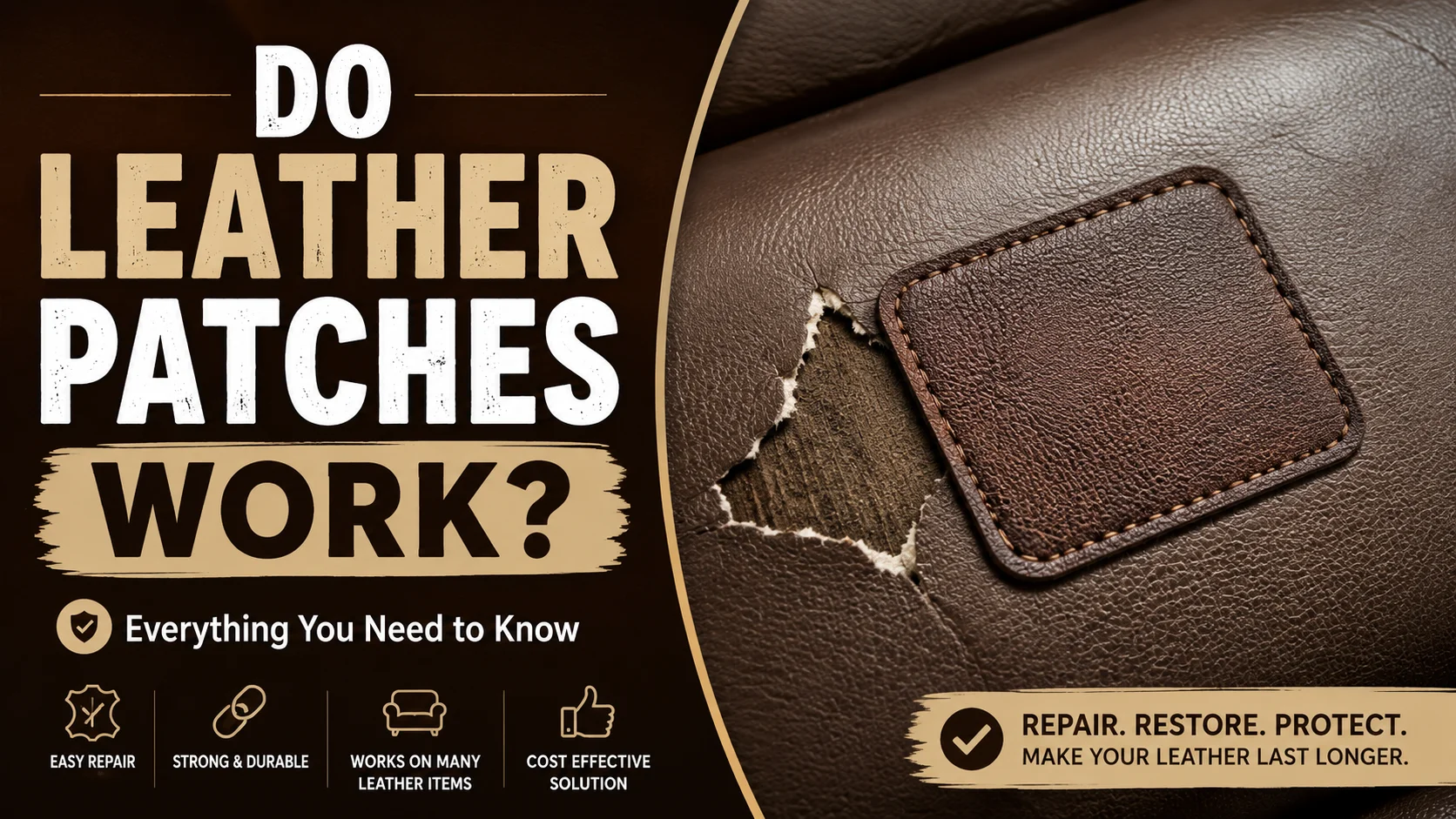
Leather is known for its durability, but regular use can eventually cause scratches, cracks, peeling, holes, and small tears. Replacing an entire leather jacket, sofa, bag, or car seat can be expensive, which is why leather patches have become a practical repair option.
But do leather patches actually work?
Yes, leather patches can work very well when you choose the right patch and apply it correctly. They are especially useful for covering small tears, worn areas, scratches, cracks, and holes. However, the final result depends on the patch material, adhesive strength, condition of the original leather, surface preparation, and amount of daily wear.
In this guide, we’ll explain how leather patches work, where you can use them, the different types available, their advantages and limitations, and how to get a longer-lasting repair.
What Are Leather Patches?
Leather patches are pieces of genuine leather, synthetic leather, faux leather, or leather-like repair material used to cover damaged areas or decorate leather products.
They are commonly available as self-adhesive, sew-on, decorative, embossed, and other patch styles. Some patches are designed primarily for repair, while others are used for branding or decoration.
If you’re exploring your options, understanding the different types of custom patches can help you choose a suitable construction and attachment method.
Leather patches can be used on jackets, sofas, chairs, bags, car seats, boots, furniture, and many other leather products.
Do Leather Patches Work?
Yes, leather patches can provide an effective solution for many types of minor and moderate leather damage.
They work particularly well when the material surrounding the damaged area is still strong. A patch covers the tear or worn section and may help prevent the damage from becoming larger.
For example, a small tear in a leather sofa cushion can often be covered with a properly sized repair patch. Similarly, a patch can cover a scratched or torn section of a leather jacket without requiring you to replace the entire garment.
However, leather patches cannot solve every problem.
If leather is severely deteriorated, peeling across a large surface, heavily stretched, or damaged underneath, simply covering the surface with a patch may provide only a temporary improvement.
How Do Leather Patches Work?
Most leather patches are attached using adhesive, stitching, or a combination of the two.
Self-adhesive patches contain an adhesive backing. You clean and dry the damaged area, remove the protective backing, position the patch, and press it firmly onto the surface.
Sew-on patches are attached with thread. They are commonly used on jackets, bags, motorcycle clothing, and other items that experience regular movement.
A basic leather patch repair usually involves:
- Cleaning and drying the damaged area.
- Removing loose or uneven material around the damage.
- Measuring the affected area.
- Cutting or selecting a patch slightly larger than the damage.
- Positioning the patch carefully.
- Applying even pressure or stitching it securely.
- Allowing adhesive patches enough time to form a strong bond.
Good preparation is one of the most important factors affecting the quality and durability of the finished repair.
What Types of Damage Can Leather Patches Repair?
Leather patches can be useful for several common types of damage.
Small tears are one of the best applications. Covering a small tear can prevent its edges from being repeatedly pulled apart during normal use.
Patches may also help cover:
- Small holes
- Scratches
- Worn surfaces
- Minor cracks
- Small burns
- Punctures
- Localized peeling
- Cosmetic imperfections
A patch may also reinforce leather that has become thin because of repeated friction.
However, surface repair is different from structural repair. If damage extends into the foam, seams, frame, or other components underneath the leather, those problems may need to be repaired separately.
Where Can You Use Leather Patches?
Leather patches are versatile, but the correct patch and attachment method depend on the item being repaired.
Leather Furniture
Furniture is one of the most common applications for patches.
Leather sofas and chairs can develop scratches, cracks, and tears in areas that receive repeated pressure, particularly seat cushions and armrests.
A repair patch can cover a small damaged section and improve the appearance of the furniture.
For a more natural-looking repair, choose a patch with a colour, texture, and finish that closely resemble the original upholstery.
Leather Jackets
A patch on a leather jacket can be both functional and decorative.
It may cover a scratch, tear, worn section, or small burn while also adding a customised appearance.
Because jackets bend and move constantly, attachment strength is important. Sew-on patches can be a useful option when the construction of the garment allows stitching.
Car Seats
Leather and leather-like car seats can develop cracks, scratches, and tears because of friction, sunlight, heat, and repeated use.
Self-adhesive patches may be suitable for relatively small damaged sections.
Car seats receive frequent pressure and movement, however, so proper surface preparation and patch quality are particularly important.
Bags and Accessories
Patches can also be applied to suitable handbags, backpacks, wallets, and accessories.
When a repair cannot be completely hidden, a decorative patch may turn the damaged area into an intentional design feature.
Genuine Leather Patches vs Faux Leather Patches
Not every patch uses the same material.
Before choosing one, it can be useful to understand the best fabric for patches and how material selection affects appearance, flexibility, attachment, and durability.
Genuine Leather Patches
Genuine leather patches are made from animal hide and offer the natural characteristics associated with leather.
They can be particularly attractive when applied to genuine leather products because a carefully selected patch may provide a similar texture and appearance.
Natural leather can also change as it ages, although the exact result depends on the leather type, finish, treatment, and use.
Faux Leather Patches
A faux leather patch is made from synthetic material designed to imitate the appearance of natural leather.
These patches are available in many colours, finishes, and textures and can be convenient for repairing synthetic leather products.
Whether genuine or faux leather is the better choice depends on the original material, application, appearance, required durability, and budget.
Self-Adhesive vs Sew-On Leather Patches
Self-adhesive leather patches are convenient because they require little equipment. They can be useful for quick repairs on furniture, car interiors, and other surfaces where sewing may be difficult.
Sew-on patches require more work but can provide secure attachment on suitable flexible items such as jackets and bags.
If you’re unsure which method is appropriate, our comparison of iron-on vs sew-on patches explains the major differences between common patch attachment methods.
Heat requires particular caution when leather is involved. Before considering a heat-activated backing, learn can you iron a patch on leather and what precautions should be considered to reduce the risk of damaging the material.
Ultimately, the right attachment method depends on the leather, patch backing, manufacturer’s instructions, and amount of movement the repaired area receives.
How Long Do Leather Patches Last?
There is no single lifespan that applies to every leather patch.
A quality patch attached correctly to a clean and stable surface may remain effective for a long time. A poor-quality patch applied to dirty, oily, unstable, or deteriorating material can fail much sooner.
Several factors affect durability.
Surface preparation: Dirt, oil, moisture, and some leather-care products can interfere with adhesive bonding.
Patch quality: Better patch materials and adhesives generally provide a more reliable starting point.
Placement: A patch on a low-contact area may experience less stress than one placed directly on a frequently used seat cushion.
Movement: Jackets, bags, and seating surfaces flex regularly, placing additional stress on the patch.
Environment: Heat, sunlight, moisture, and other environmental conditions can affect both the leather and adhesive.
Following the manufacturer’s application and care instructions is therefore important.
Are Leather Patches Permanent?
Leather patches can provide long-lasting repairs, but they should not automatically be considered permanent restoration.
For small areas of damage, a properly applied patch may remain effective for a considerable period.
Large tears and heavily stressed areas can be more challenging and may eventually require additional repair.
Professional leather restoration may be more appropriate for expensive furniture, valuable leather goods, classic car interiors, widespread damage, or situations where maintaining the original appearance is particularly important.
The advantage of a patch is that it provides an accessible repair option before replacing the entire item becomes necessary.
Do Leather Patches Look Natural?
Leather patches can look convincing when they closely match the surrounding material.
Colour is one of the most important considerations. Black, brown, tan, cream, and other leather shades can have many subtle variations.
Texture matters too.
A smooth patch can stand out when applied to strongly grained leather. Likewise, a heavily textured patch may be obvious against a smooth surface.
The finish, thickness, shape, and positioning of the patch can also affect its appearance.
For adhesive repair patches, rounded corners may be preferable to sharp corners in some applications because there are fewer pointed edges that can catch during use.
What Are Leather Embossed Patches?
Leather embossed patches feature designs, logos, letters, symbols, or patterns pressed into or raised from the surface.
They are frequently used for branding and decoration on clothing, hats, bags, jeans, jackets, and accessories.
Unlike basic repair patches, embossed patches are often chosen primarily for their appearance.
However, a decorative patch can sometimes serve two purposes: covering a suitable minor imperfection while turning the area into a deliberate design feature.
Leather Patch Designs for Decorative Applications
Not every patch needs to disappear into the original leather.
Sometimes making the patch visible is the better design decision.
Leather patch designs can include logos, geometric shapes, lettering, vintage-inspired artwork, embossed graphics, custom shapes, and contrasting colours.
Decorative patches are especially useful when finding an exact colour or texture match is difficult.
For logos and detailed branded artwork, custom embroidery patches are another option when the product and application are suitable for an embroidered construction.
Different textile patch constructions also produce different levels of detail and texture. Our guide comparing woven vs embroidered patches can help you understand which style may work better for a particular design.
Instead of trying to hide every repair, a carefully designed patch can become an intentional visual feature.
When Should You Not Use a Leather Patch?
Leather patches are useful, but they have limitations.
A patch may not be the best solution when leather is severely peeling or deteriorating across a large surface.
You should also avoid relying on a surface patch alone when the material underneath is damaged.
Very large tears can require more extensive repair because a patch needs stable surrounding material for proper attachment.
It is also important to identify why the damage occurred.
For example, if a sofa keeps tearing because of damaged internal support, simply covering the surface will not solve the underlying problem.
Professional assessment may be a better option when the damage is widespread, structural, valuable, or difficult to evaluate.
How to Apply a Leather Patch Correctly
Correct application can make a significant difference to the finished result.
First, inspect the damaged area and make sure a patch is an appropriate repair method.
Next, clean the surface according to the care requirements of the original material. Remove dirt and residue that could interfere with adhesion and allow the area to dry completely.
Remove loose material carefully without unnecessarily enlarging the damaged area.
Measure the damage and select a patch that provides sufficient coverage around it.
If you’re using a cut-to-size adhesive patch, rounded corners may help reduce exposed points that can catch during normal use.
Carefully position the patch before applying full pressure.
Once positioned, press the patch evenly according to the manufacturer’s instructions.
Finally, allow any adhesive the recommended amount of time to bond before placing the repaired area back into normal use.
Always follow the specific instructions supplied with your patch because different adhesives and materials can require different preparation and curing methods.
Advantages of Leather Patches
Leather patches offer several practical advantages.
They can be considerably more affordable than replacing an entire sofa, jacket, bag, seat cover, or other leather item.
Many self-adhesive repair patches can also be applied without specialist equipment.
A suitable patch may prevent minor damage from becoming more noticeable while improving the overall appearance of the item.
Another advantage is variety.
Different materials, colours, textures, shapes, backing options, and decorative styles allow you to choose a patch based on both function and appearance.
Limitations of Leather Patches
One of the main limitations is visibility.
Even a carefully matched patch may remain noticeable, particularly when the original leather has an unusual grain, colour, patina, or finish.
Adhesive patches may also have difficulty bonding properly to dirty, oily, highly textured, unstable, or deteriorating surfaces.
Colour matching can be challenging, particularly with older leather that has changed through wear and exposure.
Patches are also less practical for widespread deterioration.
If a large sofa is peeling or cracking across multiple sections, repeatedly covering individual areas may create an inconsistent appearance without addressing the underlying deterioration.
Leather Patch vs Professional Leather Repair
A leather patch is often suitable for relatively small damage, DIY projects, limited budgets, and situations where a visible repair is acceptable.
Professional leather repair may be more appropriate for expensive leather products, large tears, extensive deterioration, colour restoration, structural problems, or situations where the final appearance is particularly important.
The decision should be based on the item’s value, type of material, location of the damage, severity of the problem, and desired finish.
For an everyday item with a small tear, a quality patch may provide a practical solution. Premium furniture, luxury leather goods, or significant damage may justify professional restoration instead.
If you’re considering a made-to-order patch rather than a standard repair product, understanding custom patch pricing can also help you see how factors such as material, size, design, quantity, and construction affect the cost.
Conclusion
So, do leather patches work?
Yes. Leather patches can be an affordable and practical way to deal with small tears, scratches, holes, worn sections, and other localized damage.
They perform best when the surrounding material remains stable, the correct patch is selected, and the surface is properly prepared before application.
Matching the colour, texture, material, and attachment method can also improve both appearance and durability.
However, a patch cannot fix every type of leather damage. Severe deterioration, structural problems, extensive peeling, and valuable items may require professional repair.
For suitable minor and moderate damage, though, a well-selected and correctly applied leather patch can help improve appearance and extend the useful life of many leather products.
Frequently Asked Questions
Do leather patches really stay on?
Quality adhesive leather patches can stay attached when they are compatible with the material and applied to a properly prepared surface. Dirt, oil, moisture, deterioration, heavy movement, and poor-quality adhesive can reduce their effectiveness.
Can you patch a hole in leather?
Small holes can often be covered with an appropriately sized leather repair patch. Larger holes or damage affecting the material underneath may require additional repair or professional attention.
Can I put a patch on a leather jacket?
Yes. Patches can be used on suitable leather jackets for repair or decoration. The appropriate attachment method depends on the jacket material, patch construction, and location.
Do leather patches work on couches?
Leather patches can work on couches for suitable small tears, scratches, holes, and worn areas. Frequently used seating areas receive more movement and pressure, so patch quality and proper preparation are particularly important.
Can you patch faux leather?
Some faux leather surfaces can be patched, but compatibility matters. Choose a repair material and adhesive intended for the type of synthetic surface you are repairing.
Are genuine leather patches better?
Not in every situation. Genuine leather can provide a natural appearance for some genuine leather products, while synthetic patches may be more appropriate for faux leather or certain repair applications.
Can leather patches be removed?
Some adhesive patches can be removed, but removal may leave adhesive residue or affect the finish underneath. Follow the product manufacturer’s removal instructions whenever available.
How can I make a leather patch less noticeable?
Choose a patch that closely matches the original leather’s colour, texture, grain, thickness, and finish. Careful sizing and positioning can also help the repair blend more naturally with the surrounding material.

