
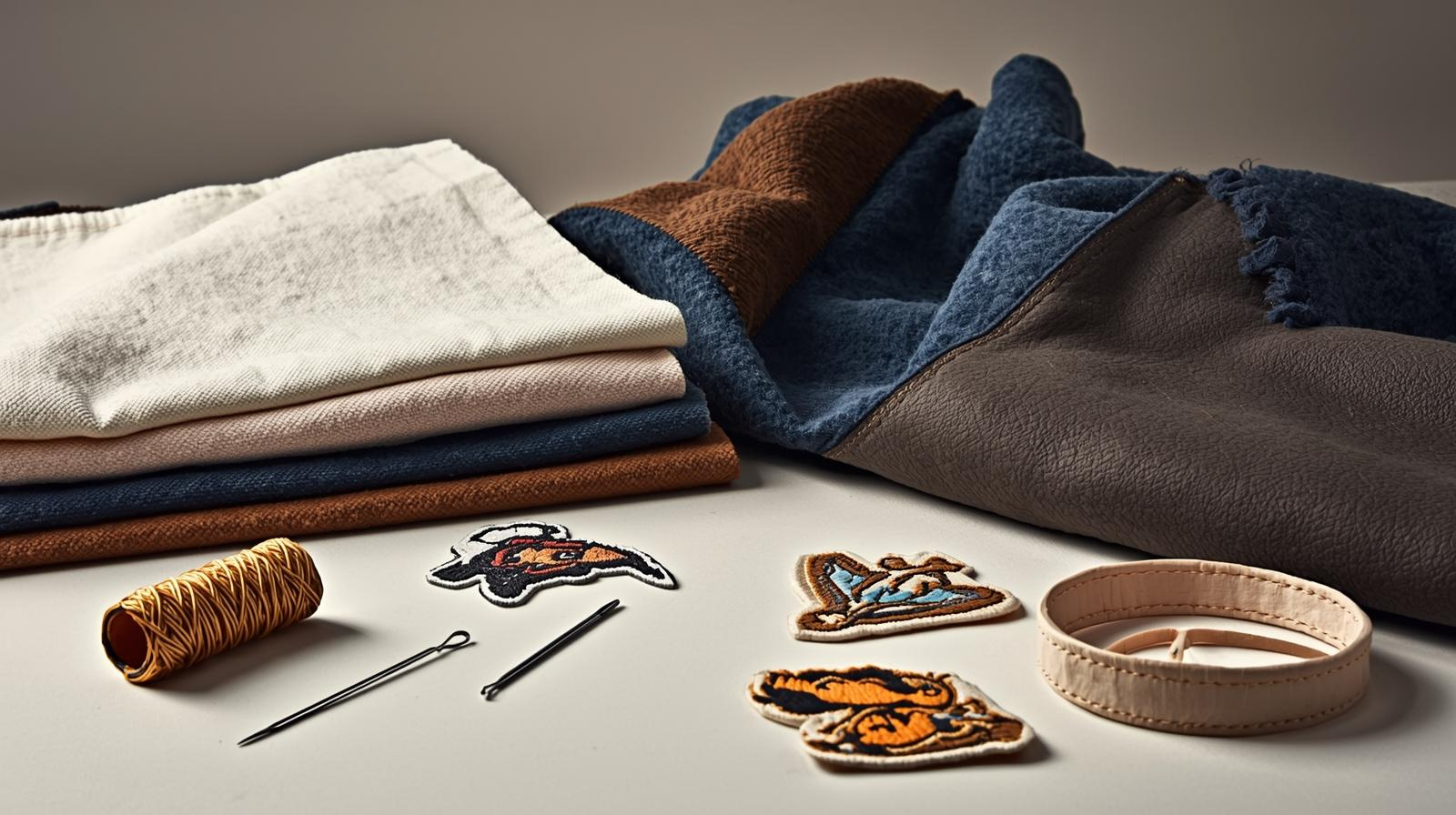
The fabric you choose makes a difference in crafting or customizing patches that give an outstanding finish and hold up over the years. It doesn’t matter if you are making leather patches, embroidered, or woven; you need to choose the right patch material. You are in the right place because SBS Digit makes high-quality custom patches and has unique designs to make your brand stand out, and is ready to give you the best patch fabric advice.
This article provides detailed advice on the best fabrics for patching, embroidery, woven, leather, chenille, PVC, and other types of patches. Understanding the fabric for embroidery patches is helpful whether you are a DIY lover or have a patch business.
1. Best Fabric for Embroidery Patches
When you are making embroidery patches, the fabric is your base. With the right fabric, the thread sits happily, your patches last, and there are no tears. Here are the best choices that cotton twill patch fabric is.
Cotton Twill: A patch fabric that is the most popular choice for embroidered patchwork. It holds a sturdy weave, a smooth surface for detailed designs, and there are a variety of weights, making this twill fabric suitable for a variety of patches.
Felt: Custom embroidered patches have a softer and more textured look when using felt. It is easy to cut, won’t fray, and is perfect for detail. Felt is a good option for patches that will not get a lot of rough use and scratching.
Polyester: Another great fabric for embroidered patches is polyester. It is a strong, long-lasting fabric that stays great in all weather conditions. This fabric is amazing for making patches that will go on uniforms, bags, and other apparel that get frequent use.
2. Embroidery Mesh Fabric
If you want something more specific, you can get embroidered mesh fabric. It is a good option for softer patches, because it gives the embroidered patch an airy and delicate look. It is also great for outdoor and athletic patches because it is lightweight, breathable, and doesn’t use too much fabric. It is also for more airy and detailed designs because it allows the embroidery threads to pop and stand out.
3. Best Fabrics for Woven Patches
Woven patches are different from embroidered patches in that they are made with a fabric that is a little finer. This is what allows for more detailed and closely knit designs. The following fabric types work best for woven patches.
Cotton/polyester blend: This fabric is extremely durable and is good at holding woven designs. This fabric is often used for custom woven patches made in the USA because it makes it easy to incorporate fine woven details into the fabric.
Nylon: Nylon is extra awesome because it is super strong and very lightweight. This is why it’s used a lot for custom embroidered patchwork on flexible items like bags, hats, and even jackets.
4. Fabrics for Chenille Patches
The patches that most people enjoy the most and the fabric that adds the most flair are the type of fabric known as chenille. Custom chenille patches made in the USA have a 3D texture that makes them truly one of a kind. There is a good mix of cotton and synthetic fibers that makes chenille super plush. This fabric is good for more detailed designs as well as larger logos on accessories and outerwear like jackets and caps.
5. PVC Patches Fabric
If you want something modern and durable, PVC patches are an excellent choice. Made of a soft rubber, these patches are waterproof and weather-resistant and hence are perfect for outdoor gear, bags, and uniforms. PVC patches in Patches USA are a popular choice for tactical patches, sports teams, and event merchandise.
6. Leather Patches Fabric
If you are looking for a premium, high-end, and durable patch, then leather is your answer. Custom leather USA patches are a perfect choice for trendy items like jackets, wallets, and belts. Leather has a luxurious feel along with a rustic, timeless look to it. Logos and designs can be embroidered, stamped, or heat-pressed for a premium look.
7. Sequin Patches Fabric
Sequin patches are great for designs that need a little extra sparkle and shine. These patches are popular in the fashion industry and costume design. The fabric is usually a polyester or nylon with sequins sewn on or attached to the surface. Custom Sequin Patches in the USA are trendy and often used for special event garments or party wear.
8. Cloth Patch Material
When you’re looking for cloth patch material, consider cloth. It is great for all-around patches, durable, flexible, and is good for sewing and ironing onto jackets, bags, and uniforms. Take your pick of cotton, canvas, or polyester cloth, depending on the look and feel you want. It works well for customized embroidered patchwork or badge cloth.
9. Badge Cloth
This badge cloth is heavy, durable, and is used for patches on uniforms. It is good for patches that will be used functionally and remain in one place for a long time, since they will endure a lot of physical stress and even repeated washing. Badge cloth is best for high-quality embroidered patches that will need to be seen, like on team logos, or important logos like official insignia.
Conclusion
Different factors are important when choosing fabric for a patch, including the type of patch you are making, what you want to use the patch for, and what level of durability you are after. For example, at SBS Digit, we offer a large array of Custom Embroidery Patches in the USA, such as chenille, PVC, woven, and leather. Choosing the optimal fabric for your patch types will enable you to create quality designs that will endure and stand out.
Frequently Asked Questions (FAQs)
Q1. What is the best fabric for embroidery patches?
A1. Cotton twill and polyester are the best for embroidery patches. They are sturdy enough to support the embroidery threads and flexible enough to allow for movement.
Q2. Can I use felt for embroidered patches?
A2. Absolutely! For detailed designs, felt is a really good choice. It is easy to cut and frays less than other fabrics, which makes it perfect for a smooth stitching surface.
Q3. What’s the difference between embroidered and woven patches?
A3. With embroidered patches, threads are stitched manually on the fabric, resulting in an apparent texture to the design. For woven patches, threads are woven off the fabric. This results in a smoother look to the design and allows for more detailed finishing.
Q4: What fabric is best with PVC patches?
A4. Since PVC patches are made from rubber or plastic, they don’t use fabric. These are perfect for flexible, weather-resistant designs.
Q5: What is chenille patch fabric, and why is it used?
A5. Chenille patch fabric is soft and fuzzy, and it makes patches pop with a 3D effect. It is made for patch designs that need a more defined texture and a standout visual effect.
Q6: How do I select the fabric for my custom patch?
A6. Think about the durability, texture, and the patch’s purpose. For more durable patches, go for lasting materials like cotton twill, polyester, or leather. For more decorative patches, it is better to use felt or chenille.

